If you put a creative work out into the world and someone has a very negative reaction to it, I find that often the best thing to say is:
Thanks for the feedback, sorry it wasn't for you.
Now if they made some factually untrue statement, you should push back on it,1 and if they're using the critique as cover to make personal attacks, feel free to tell them to fuck off. But if they're giving you a good-faith negative assessment of your work? It's usually best not to engage.
Using myself as an example, I make games. I have a set of ideas and values that go into my games. Not everyone is going to agree with my ideas, and not everyone is going to share my values. This is okay.
Ideally, I'd like it if everyone could find something to like in my work, but with billions of people in the world, some of them are going to be my diametric opposite and disagree with me about everything. If this happens, it means I got a bad roll. Someone else in the world would love my work and agree with me about everything, they're just not the one who happened to see it and decide to chime in that day.
This doesn't mean I ignore all negative feedback. I try to keep an open mind and assume that any critique being made might have merit, especially if the critic suggests that my work is potentially harmful. But for matters of personal taste, it's best to incorporate the critiques I find helpful and write off the ones I don't.
Getting defensive is almost never productive. I could have a point-by-point rebuttal of every opinion they offered. I could tell them exactly why I made the choices I made, and why I think those choices are good. But in the end, the proof is in the pudding:2 if I didn't convince them my ideas have merit by putting them in the game, I'm probably not going to convince them by writing an essay.
It wouldn't help me, either. I'd still feel hurt, I might make it worse, and by mounting an airtight defense, I shut my mind off to the possibility that some of their points might have merit. This is bad! This is how artists stop growing and get into ruts. Every piece of negative feedback is a potential gift, and should be treated that way. If I'm open to the idea that they might be right, my work can only improve.
Also, defensive artists almost never come away looking good, no matter how right they might be. Even if a critic demonstrates total ignorance about the artform and is talking 100% out of their ass, you'd be wise to tread carefully. Correct any factual errors, but don't get heated, because it's just going to make you look like you can't take criticism. It's going to make you look petty. I know: the person's an idiot and it would be so satisfying to put them in their place. Resist the temptation. The feeling will pass, and the optics almost never work out in your favor.
Again, this is all assuming the critic is engaging with your work, not attacking you personally. If they are making it personal... Well, the best thing would probably be to block/mute and move on, since any time spent arguing with assholes on the internet is a waste of precious moments in this cosmic blip of a lifespan; but if you're sure that fighting is really how you want to spend those moments, follow your bliss.
Now, it's possible that you'll encounter a critic who has a lot of negative things to say about your work—or a lot of people saying similar negative things—and you'll be horrified to realize that most or all of their points have some merit. Don't panic. This doesn't mean you're a bad person and it doesn't even mean you're a bad artist: it means you have some assumptions about your work that you need to re-evaluate. It's critical that you not get defensive at this stage, because doing so will probably lead to doubling down, and you'll get even more intense criticism the next time, and you'll double down again, and this is an artistic death spiral. It can be almost impossible to escape. If you want a sad cautionary tale, look at Scott Adams. Look at Nicki Minaj. Look at Graham Linehan.
I must now transition into some general life advice. "What makes you qualified to give life advice," you might ask. My qualifications are:
- I'm alive, and
- I have a lot of regrets.
Never take advice from people who say they have no regrets. If it turns out that their advice is wrong, do you really think giving you bad advice is the first thing they'll ever regret doing? Hell no! It means they don't care if the advice they give you is good or bad, which is a big red flag for an advice-giver.
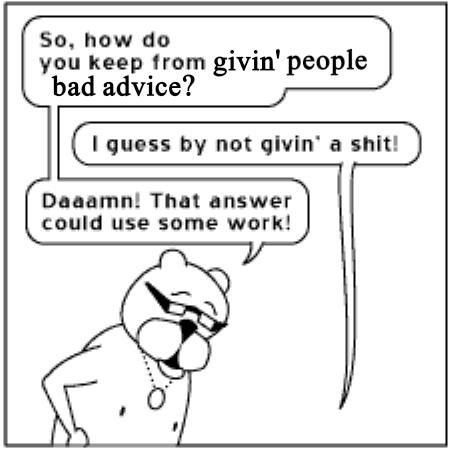 |
| Don't take advice from a Todd. |
(for that matter, don't take life advice from people who aren't alive;3 they have nothing to lose if they get it wrong.)
Anyway, the advice is this: try to be a well-rounded person.
If you identify yourself 100% with your work, then any criticism of your work will feel like a personal attack, even when it's not. This makes the defense/doubling down/death spiral much more likely. In moments of ego devastation, it's crucial that there be other parts of you you can feel good about. Friends (and sometimes family) can be your life support: they give you an outlet for your despair, and reassure you that you're not the worst things people say about you. Because you're not. You're a whole complicated person, just like everyone else.
Have other parts of your identity. Have creative outlets and other hobbies you don't share with anyone you're not close to. If you don't think you're a well-rounded person, start trying to be one. It doesn't need to be a huge commitment; in fact, it's best to start small. If you don't take walks, start being a person who takes walks. If you haven't been to the movies in years, start being a person who goes to the movies. Maybe see some bad ones to feel better about yourself. It doesn't have to be every day. Mix it up. Be a person who goes to the museum. Be a person who bakes delicious pastries. Be a person who paints or writes poems. If you try learning a skill, accept that you won't be perfect: learning to be imperfect is part of the point.
If you find yourself the subject of intense criticism, it's important not to engage right away: your immediate reaction will never be the best version of yourself. Get some emotional distance first. Fall back to the other parts of your identity. Get support from the people you can get support from.
Some people on the internet might be shitty about this: they'll say things like "your silence speaks volumes". Ignore them. People who say "your silence speaks volumes" aren't interested in good outcomes, they're just trying to score points in a game you don't want to play. Don't let them goad you into responding before you're ready.
If you hurt people, you're going to have to apologize. It needs to be a real apology, acknowledging what you did wrong, how you're going to make it right (if applicable) and how you're going to change in the future. It has to be sincere: people will be able to tell if it's not. Take however long you need to make the apology real and sincere. If you can't get there, try therapy.4
If you just made some bad art, hey, they can't all be zingers. You don't need to respond at all. Channel your inner Ed Wood and believe you can make the next one better. Then make the next one better.
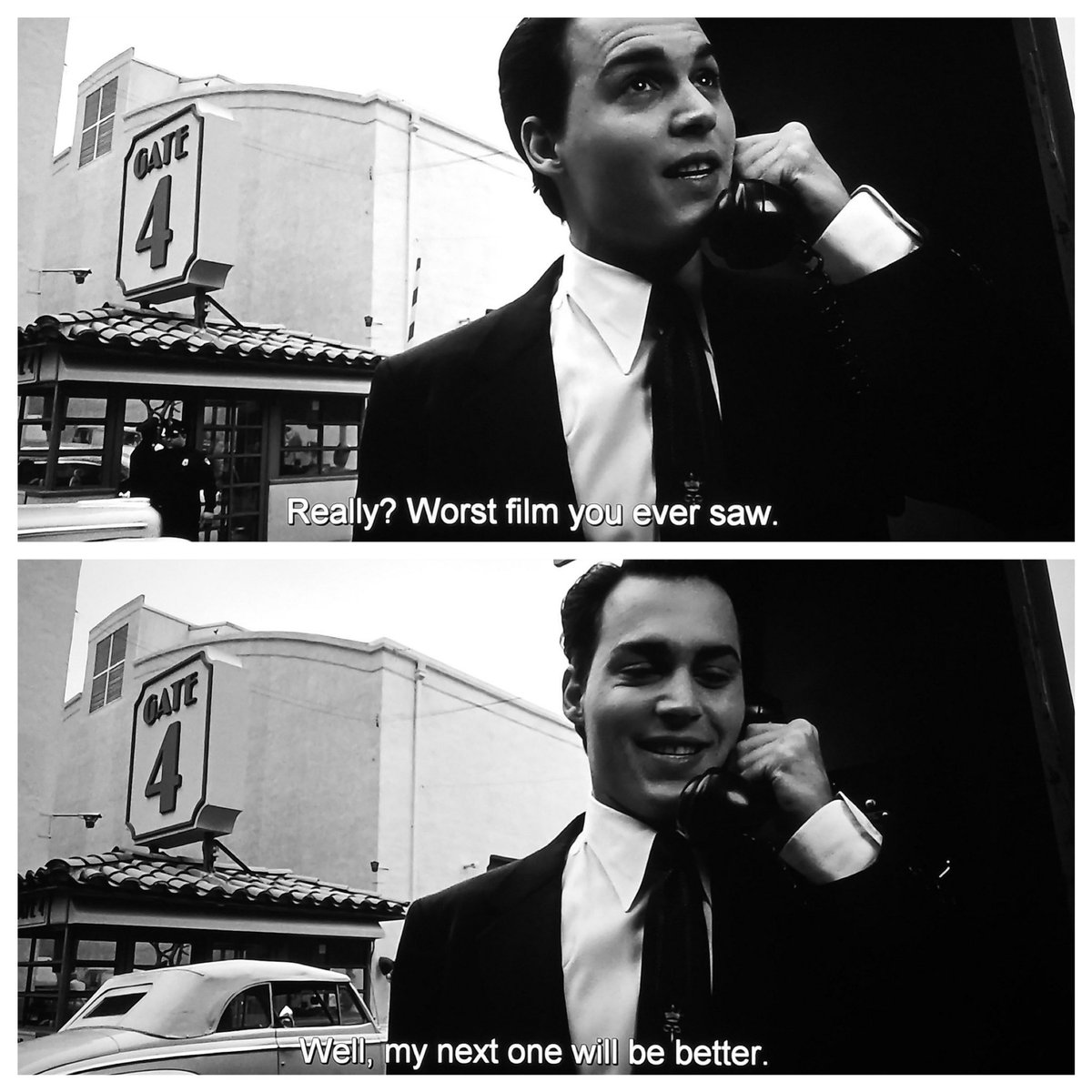
But if you want to respond, all you really need to say is:
Thanks for the feedback
and
Sorry it wasn't for you.
Other options
If after reading this your conclusion is "this sounds way too hard", here are some other tactics you might try:
1. Just make stuff for yourself. Henry Darger made some of the most fascinating and impenetrable art of the 20th century and never showed anyone. There are wikis with millions of words of unreadable worldbuilding for someone's personal Sonic the Hedgehog fanon. If this makes you happy, go for it.5 You're not forcing anyone to read it.
2. Ignore all feedback, and ignore the consequences of ignoring it. Not recommended for obvious reasons, but people like Doug Walker and Neil Breen have built brands out of producing trash and they seem totally oblivious that other people can see what they're doing. They're happy enough, as far as I can tell? I couldn't bear the psychic burden of being Doug Walker, but if you figure it out, have at it. Just don't hurt anyone.
3. Psychedelics. Also not recommended for obvious reasons, but you don't have to worry about your ego getting bruised if you kill it.
Good luck!
-
If you don't know how to tell a factual statement from an opinion, work on that before anything else. ↩
-
Yes, I know, don't @ me. ↩
-
Or at least find someone who is alive to sign off on it. ↩
-
If you still can't get there, then maybe being visible in the public sphere isn't for you. I'd suggest some alternatives, but you're probably going to crash out and join the right-wing grift economy. I hope you don't, I promise it won't make you happy. ↩
-
But don't use genAI for this, come on. What are you even doing? If you're not writing it, and nobody's reading it, what the hell's the point? ↩